What is ContGPT?
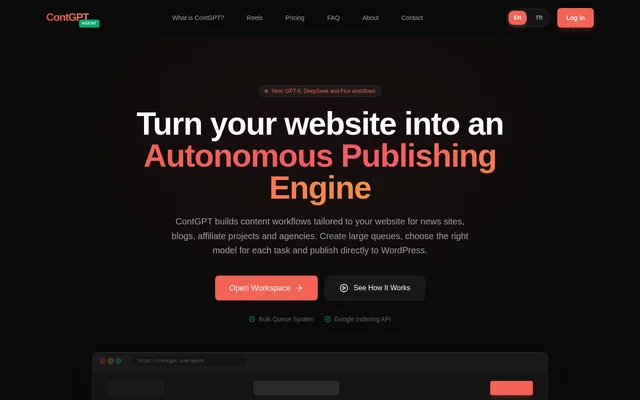
ContGPT is an AI content generator and WordPress publishing agent that connects planning, writing, visual production and publishing in a web workspace. ContGPT serves publishers managing news sites, niche blogs, affiliate projects and client websites. The workflow supports both editorial drafts and direct publication, allowing teams to choose how generated content enters their WordPress publishing process.
ContGPT organizes production around queues rather than isolated article requests. Teams can manage title planning, model selection and WordPress delivery together, while scheduled agents follow a site's categories and existing content tone. The stated audience also includes e-commerce teams, SEO teams and freelance publishers.
What ContGPT can do
ContGPT combines text generation, visual generation and publishing controls within the same production flow. ContGPT provides live search-backed research inputs and lets publishers choose different models for different tasks. Bulk queues handle background processing, while retry behavior helps the workflow continue after short-lived failures.
- ContGPT generates title clusters and search-intent-aware outlines from a broad topic.
- ContGPT processes article batches through a background writing queue.
- ContGPT creates featured media and section-relevant inline visuals.
- ContGPT creates semantic internal links using existing site content.
- ContGPT populates ACF and Pods custom fields.
- ContGPT detects WordPress content types and routes entries into the corresponding structures.
- ContGPT can trigger Google Indexing API notifications during publishing.
How ContGPT works with WordPress
ContGPT connects to WordPress through the ContGPT Connector or application passwords. Publishers define topics, tone, language and publishing rules before generation begins. ContGPT prepares titles and structures, writes and formats articles, adds images, and sends the resulting content to WordPress as drafts or published posts.
ContGPT also supports named agents with a focus topic and an hourly, daily or weekly schedule. ContGPT examines the connected site's categories and content tone before planning new titles. Scheduled runs operate in the background via cron, with publishing behavior determined by the configuration chosen for the agent.
Who ContGPT is for
ContGPT targets website operators with repeatable content production needs. News publishers can organize topical coverage by category, while blog owners can build topic clusters and maintain a publishing cadence. Agencies can standardize workflows across multiple WordPress properties while accommodating different client structures and brand tones.
- ContGPT supports category-based news queues and editorial drafts.
- ContGPT helps niche blogs organize topic clusters.
- ContGPT produces affiliate buying guides, comparisons and list posts.
- ContGPT supports repeatable production across agency-managed WordPress sites.
ContGPT pricing and credit packs
ContGPT includes starter credits for new accounts and sells additional capacity through one-time credit packs. The Starter pack costs $6 for 1k credits, and the Standard pack costs $14 for 2500 credits. Both packs list full workspace access, and purchased credits stay in the account.
ContGPT displays live model credit values and approximate costs in USD. Article cost depends on the selected text model, article configuration and image generation choices. The page's estimator illustrates workflows ranging from text without images to articles with generated visuals, so the displayed examples are estimates rather than a single fixed article price.
ContGPT strengths and limitations
ContGPT brings planning, generation and WordPress delivery into a connected workflow. ContGPT supports model choice, configurable publishing schedules, custom fields and content types, which accommodates websites with more structure than standard blog posts. Draft delivery also provides an alternative to sending generated articles directly to live publication.
- ContGPT requires a WordPress connection for direct publishing.
- ContGPT uses credits, with paid top-ups needed beyond the included starter allocation.
- ContGPT costs vary according to model and visual generation choices.
ContGPT FAQ
What is ContGPT?
ContGPT is a web-based AI content generator and WordPress publishing agent. ContGPT combines title planning, article queues, image generation and publishing for news sites, blogs, affiliate projects and agencies, with delivery available as drafts or published posts.
Is ContGPT free?
ContGPT includes starter credits for new accounts, with additional usage available through paid, one-time credit packs. ContGPT lists a Starter pack at $6 for 1k credits and a Standard pack at $14 for 2500 credits, both with full workspace access.
How does ContGPT connect to WordPress?
ContGPT connects to WordPress through the ContGPT Connector or application passwords. ContGPT can send generated articles and images as drafts or published posts, populate ACF and Pods custom fields, and route content into the content types defined on the connected website.
Can ContGPT publish articles automatically?
ContGPT supports scheduled agents that generate and publish content hourly, daily or weekly. ContGPT agents examine the connected WordPress site's categories and content tone, prepare titles, produce articles and deliver drafts or live posts according to the configured publishing rules.
Can ContGPT generate images for articles?
ContGPT generates featured media and inline visuals matched to article sections before publishing. ContGPT offers image models including FLUX-1-schnell, Qwen Image and GPT-Image Mini, with credit values shown alongside the available models.
Who is ContGPT for?
ContGPT serves news sites, niche blogs, affiliate operators, agencies, e-commerce teams, SEO teams and freelance publishers. ContGPT supports category-based news coverage, topic clusters, buying guides, comparisons and repeatable publishing workflows across multiple WordPress properties.
From the community
No reviews yet
Be the first to review this tool. What you write helps the next person choose.