What is Daydream?
Daydream is a web-based AI compliance analyst for teams that review new rules, assess risk, and maintain records for audits. Daydream checks regulatory notices against the organization’s documents, identifies what may need to change, and drafts revisions for approval. The team makes the decisions, including whether to accept a proposed document edit or change a risk rating.
What Daydream can do
Daydream covers regulatory change, content review, third-party diligence, and other compliance workflows. For content review, Daydream can check a brochure against the organization’s rules and draft revised wording where a disclosure is missing. For enterprise risk, Daydream can use evidence from a vendor review to suggest a different risk rating.
- Daydream maps new rules to affected documents and operations.
- Daydream checks ads, brochures, web pages, and scripts.
- Daydream screens third parties and monitors them after review.
- Daydream drafts updates to policies when rules change.
- Daydream classifies goods and screens parties before shipment.
- Daydream uses approved answers for DDQs and RFPs.
How Daydream works
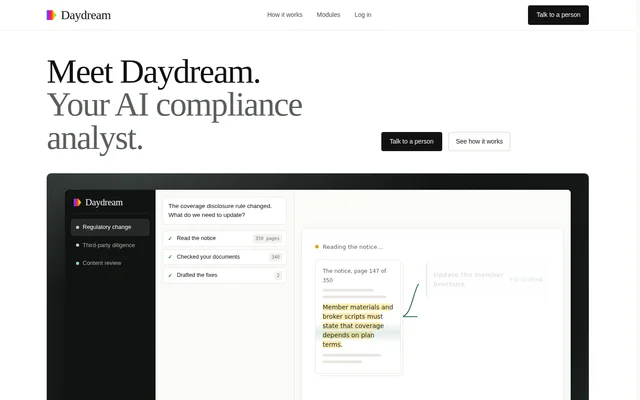
Daydream detects regulatory changes, assesses their impact, drafts updates, monitors follow-through, and records each step. In the site’s example, a new disclosure rule affects a member brochure and a broker script. Daydream drafts changes to both documents for approval and shows how a corrective action can be assigned when an old script is still in use.
Daydream can run on its own or alongside the team’s governance, risk, and compliance system, task tracker, and chat tools. A team does not have to replace its existing systems or move every workflow at once. The site describes starting with a specific bottleneck, such as content review or third-party reviews, and adding other workflows later.
Who Daydream is for
Daydream is designed for compliance and risk teams that need to turn regulatory requirements and review findings into specific actions. The site illustrates the workflow with insurance materials, including member brochures and broker scripts. Daydream also shows examples involving vendor controls, shipment screening, and security questionnaires.
- Review marketing materials before publication.
- Identify controls a vendor expects the organization to operate.
- Flag possible matches during shipment screening.
- Answer security questionnaires from approved responses.
Daydream pricing and demo access
Daydream offers a live demo, but the website does not publish prices, plan details, or free-tier terms. The demo is an opportunity to see Daydream work through a real item from the team’s compliance queue. The site suggests bringing a rule change, a document, or a third party for review.
Daydream strengths and limitations
Daydream drafts proposed fixes and keeps a record of the work for auditors. That record can help teams answer questions about who approved a change and when. Daydream does not replace the team’s judgment: suggested edits and changes to risk ratings go to staff for a decision.
- Questionnaire items without approved answers are held for review.
- Connections to some existing tools may need to be added.
Daydream FAQ
What is Daydream?
Daydream is a web-based AI compliance analyst that reads rule changes, checks content against an organization’s rules, and screens third parties. Daydream drafts changes for people to approve and keeps a record of the work for audits.
Is Daydream free?
Daydream does not state on its website whether a free plan is available. The website does not list prices or plan terms, but Daydream offers a live demo using a rule change, document, or third party supplied by the team.
How does Daydream handle regulatory changes?
Daydream detects new rules, assesses whether they apply, and maps their impact to documents and operations. Daydream drafts updates for the team to review, monitors follow-through, and records the actions and approvals for audits.
Can Daydream review ads and other marketing content?
Daydream checks ads, brochures, web pages, and scripts against an organization’s rules and drafts fixes for review. In the site’s example, Daydream suggests changing a brochure’s coverage language so that it states coverage depends on the plan’s terms.
Does Daydream work with an existing GRC system?
Daydream can work on its own or alongside an existing governance, risk, and compliance system, task tracker, and chat tools. The website says Daydream will add a connection if a team uses a tool that Daydream does not yet connect to.
From the community
No reviews yet
Be the first to review this tool. What you write helps the next person choose.