What is Polymer?
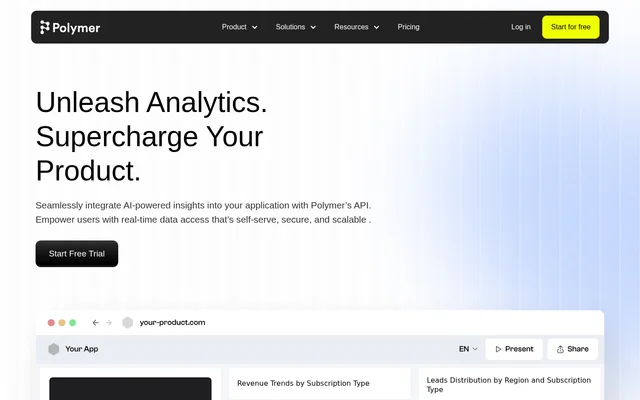
Polymer is an AI-powered embedded analytics solution for adding reports, charts, and data exploration to applications. Polymer serves developers building customer-facing analytics as well as analysts, agencies, and teams producing reports. The product combines API integration, brand customization, and AI-assisted visualization with tools that let users explore connected data themselves.
Polymer presents embedded analytics as a way to give customers access to data inside an existing product rather than building reporting features from scratch. Polymer also supports reporting outside that developer-focused workflow, with subscription plans aimed at individuals sharing reports, analysts performing advanced reporting, and agencies managing reporting needs.
What Polymer can do
Polymer brings visualization, reporting, and access controls into a connected analytics workflow. Polymer can generate dashboards and explanations with AI, provide prepared reporting templates, and give users a self-service playground for exploration. Brand settings allow customer-facing analytics to reflect an application's visual identity rather than a separate reporting interface.
- Polymer embeds charts, graphs, and visualizations in applications.
- Polymer customizes fonts, colors, and logos for branded analytics.
- Polymer generates dashboards and explains insights with AI.
- Polymer provides pre-built reports and custom templates.
- Polymer supports self-service data exploration.
- Polymer automates user permissions through its API.
How Polymer works
Polymer describes a workflow that begins with creating an account to test the product, followed by API integration into an application. Developers can connect a database or data warehouse through the API and embed visualizations in their app. API-based permission management controls which data users can access.
Polymer also offers direct connectors for advertising platforms, e-commerce tools, and web analytics. The website lists Google Ads, Facebook Ads, Google Analytics 4, Linear, and CSV Upload among its integrations. Polymer accepts data through third-party ETL tools including Windsor.ai and Dataddo, providing another route for bringing business data into reports.
Who Polymer is for
Polymer targets developers who want to add analytics to their applications, alongside individuals and teams that need reporting tools. The pricing descriptions identify analysts, agencies, and teams as audiences, while the website also provides product links for marketers and e-commerce users. These audiences share needs around connected data, reporting, and visualization.
- Developers can use Polymer to embed analytics in customer-facing applications.
- Agencies can use Polymer to prepare branded client reports.
- Analysts can use Polymer for advanced reporting and custom metrics.
- Individuals can use Polymer to share quick, one-off reports.
- Teams can use Polymer to provide shared access to reports and visualizations.
Polymer pricing and plans
Polymer offers paid plans and advertises a 7-day free trial. Polymer states that API access starts at $500/month, with custom plans tailored to data volume and user access needs. The pricing page also lists individual, team, and enterprise options, with monthly and yearly billing choices.
Polymer's pricing page includes multiple tables that assign different prices and allowances to similarly named plans. The tables also differ on syncing schedules and AI chat limits, while a Pro listing advertises a 14-day trial. These differences make the page insufficient for establishing a single definitive subscription comparison.
Polymer strengths and limitations
Polymer combines several capabilities relevant to customer-facing analytics: embedded visualizations, brand customization, API-managed access, and self-service exploration. Polymer also supports multiple connection methods, including direct connectors and third-party ETL tools. Together, these features cover both the presentation of reports and the movement of data into those reports.
- Polymer charges separately for API access starting at the published API price.
- Polymer limits AI chat allowances and data syncing options by subscription plan.
- Polymer lists manual data syncing for some entry-level plans.
- Polymer's conflicting pricing tables leave some plan prices and allowances unclear.
Polymer FAQ
What is Polymer?
Polymer is an AI-powered embedded analytics and reporting tool. Polymer lets developers add charts, graphs, branded reports, and self-service data exploration to applications, while also supporting reporting workflows for analysts, agencies, and teams.
Is Polymer free?
Polymer offers paid subscriptions and advertises a 7-day free trial rather than a stated permanent free plan. Polymer also lists a 14-day Pro trial in one pricing table, so the advertised trial duration varies across the supplied page.
Does Polymer have an API?
Polymer provides an API for connecting databases or data warehouses, embedding analytics in applications, and automating user permissions. Polymer states that API access starts at $500/month, with custom plans based on data volume and user access needs.
What integrations does Polymer support?
Polymer lists Google Ads, Facebook Ads, Google Analytics 4, Linear, and CSV Upload among its integrations. Polymer also supports API connections to databases and data warehouses, plus data ingestion through third-party ETL tools including Windsor.ai and Dataddo.
Can Polymer create white-label reports?
Polymer supports white-label analytics through customizable fonts, colors, and logos. Polymer also provides pre-built reports, custom templates, and embedded visualizations, allowing businesses to present customer-facing analytics that match their brand.
Who is Polymer for?
Polymer serves developers adding analytics to applications, individuals sharing reports, analysts doing advanced reporting, and teams or agencies managing reporting needs. Polymer also includes website resources for marketers and e-commerce users.
From the community
No reviews yet
Be the first to review this tool. What you write helps the next person choose.