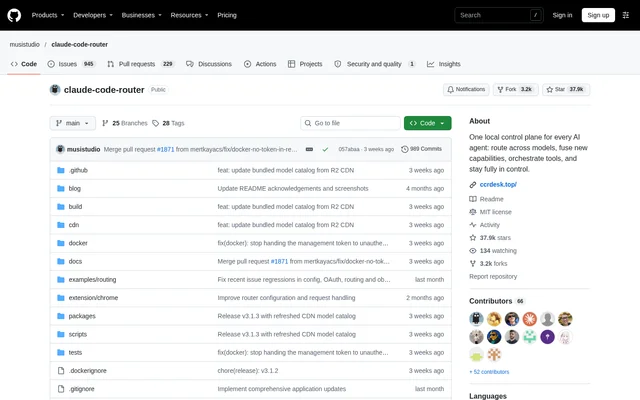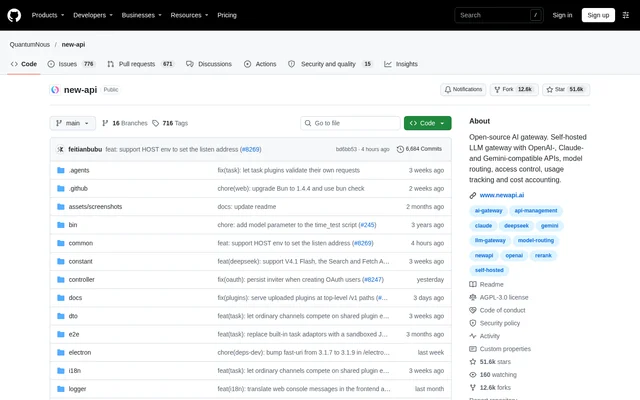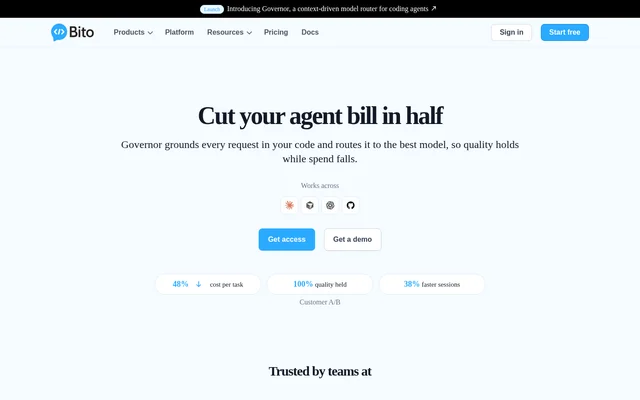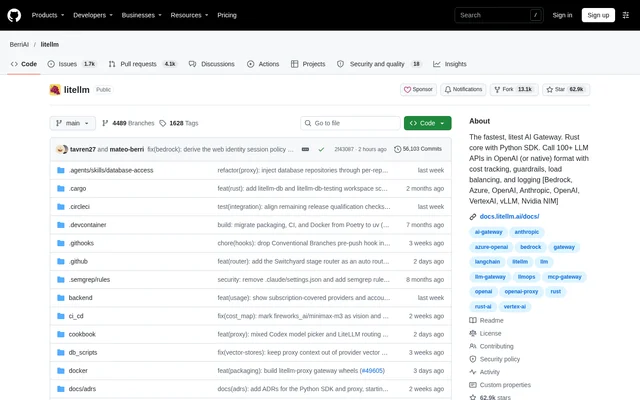
What is Weave OS Router?
Weave OS Router is a model router for developers and engineering teams that use coding agents. Instead of sending every turn in a session to the same model, Weave OS Router evaluates each request and routes it to the least expensive model expected to meet the quality bar. That lets a coding client use lower-cost models for routine work while retaining access to frontier models when the routing policy calls for them.
What Weave OS Router can do
Weave OS Router considers both task difficulty and the cost of switching models. A cheaper model is not necessarily cheaper for the full turn if switching means rebuilding the cache. The router also monitors whether the selected model is making progress, so the initial routing decision can change if the task is not getting done.
- A complexity classifier scores each turn in single-digit milliseconds.
- Weave OS Router switches down only when the savings outweigh the cost of rebuilding the cache.
- An escalation classifier routes stalled, looping, or missed tasks back to a frontier model.
- Savings reports compare observed usage with a fixed comparison model chosen by the customer.
- Teams can export savings data for finance review.
How Weave OS Router works
Weave OS Router sits between a coding client and the models serving its requests. Setup involves configuring the client to send requests through the router and adding the provider keys the user wants to use. Each key can be set to fund usage before or after plan allowances, so bring-your-own-key funding is not always the last source.
Weave OS Router provides installers for Claude Code, Codex, Copilot CLI, OpenCode, and Pi. Cursor uses manual configuration, and Claude Desktop has a separate local setup flow documented by Weave. In supported Claude Code versions, Weave Auto appears in the native model picker. Router documentation also covers hosted and self-hosted setup, the API, and routing behavior.
Who Weave OS Router is for
Weave OS Router is aimed at independent developers who want a coding subscription and engineering teams that want to manage model spend across coding sessions. The page illustrates routing for both implementation and review tasks, from refactoring modules to summarizing pull requests. For teams evaluating costs, the savings report uses a chosen baseline rather than treating the benchmark comparison as universal.
- Refactor an authentication module.
- Debug a flaky integration test.
- Summarize a pull request.
- Migrate a configuration file to YAML.
- Explain a stack trace.
Weave OS Router pricing and plans
Weave OS Router offers Code Max with a free first month and $10 in credits for $50 in usage, followed by $10 per seat per month. Code Max routes only across open-source models. Included allowances belong to individual seats and are not pooled or transferable. Enterprise uses custom pricing and includes hands-on support for on-premises deployment.
Weave OS Router is billed separately from Weave analytics. Purchased credits form a shared organization balance, unlike the allowances included with each seat. Credit top-ups add 5.5% with a $0.80 minimum, and bring-your-own-key requests carry a 5% platform fee drawn from the Weave credit balance. Enabling paid fallback does not authorize automatic recharge.
Weave OS Router strengths and limitations
Weave OS Router had lower cost and shorter runtime per trial than GPT-6 Astra on both published benchmarks, but the solve-rate comparison differed by benchmark. On Terminal-Bench 4.0, Weave OS Router solved 62.1% of tasks versus 60.6% for GPT-6 Astra. On SWE-Atlas, Weave OS Router solved 62.1% versus 66.1%. A task counted as solved if either of two attempts passed.
- The public self-hosted release uses a different routing policy, so managed benchmark results do not establish self-hosted performance.
- Code Max remains limited to open-source models regardless of the funding source.
- Subscription-served requests show no dollar savings in Router reports because they carry no per-request API charge.
- Installing Weave OS Router does not enable session analytics.
Weave OS Router FAQ
What is Weave OS Router?
Weave OS Router is a model router that chooses which model handles each turn in a coding-agent session. It weighs request complexity and cache-switching costs, then escalates to a frontier model if the selected model stalls, loops, or misses.
Is Weave OS Router free?
Weave OS Router offers a free first month of Code Max with $10 in credits for $50 in usage, then charges $10 per seat per month. Enterprise pricing is custom, and a public Apache-2.0 release is available for self-hosting.
Which coding tools work with Weave OS Router?
Weave OS Router provides installers for Claude Code, Codex, Copilot CLI, OpenCode, and Pi. Cursor requires manual configuration, and the Router documentation describes a separate local setup flow for Claude Desktop.
Can Weave OS Router be self-hosted?
Weave OS Router can be self-hosted using the public Apache-2.0 release, while Enterprise offers on-premises deployment with hands-on support. The public build uses a frozen routing policy that differs from the managed service and uses Google's embedding API by default.
How does Weave OS Router measure savings?
Weave OS Router estimates savings against a fixed comparison model chosen by the customer. The report adjusts for the coding harness's token-work ratio, cache effects, and task success where that signal exists. Subscription-served requests show no dollar savings, and the data can be exported for finance review.
From the community
No reviews yet
Be the first to review this tool. What you write helps the next person choose.