What is Design?
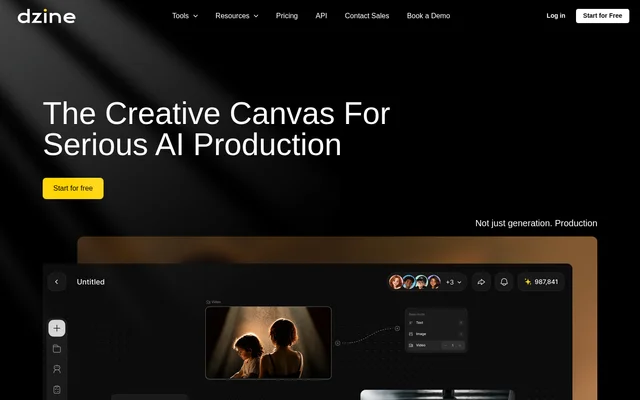
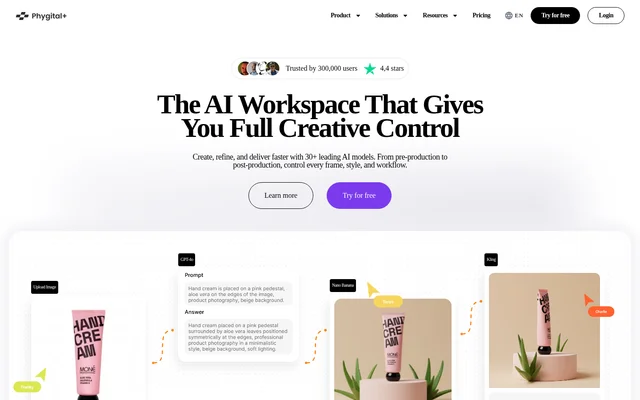
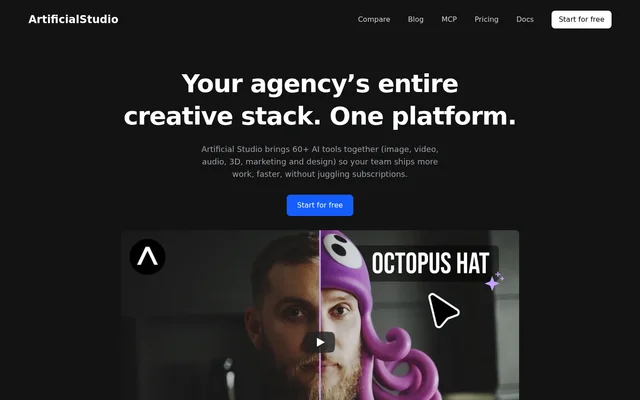
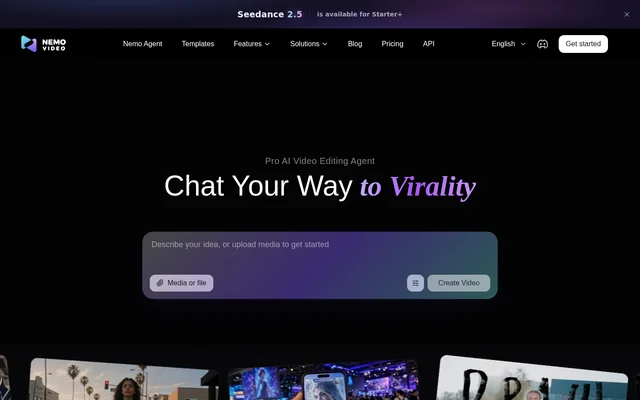
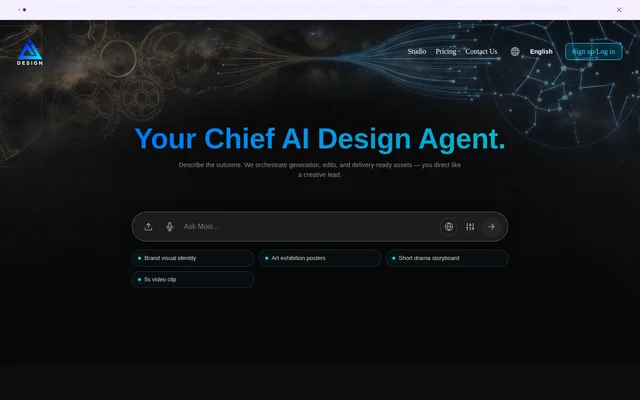
Design is an AI design agent for turning creative briefs into visual assets. Design combines generation, editing, and delivery preparation in a workflow where users direct the outcome rather than select every capability individually. The website presents brand visual identity, exhibition posters, short drama storyboards, and video clips as example outputs.
Design positions the user as a creative lead who controls briefs and approvals. The system sequences generation, camera angles, copy, and polish, with the stated aim of keeping outputs on-brand through handoff. This approach connects initial creative intent with subsequent image, typography, and layout refinements.
What Design can do
Design combines visual generation with editing controls for related production tasks. The website describes targeted image changes, editable typography, shared styling across deliverables, and reference-based camera views. These capabilities support both the creation of new assets and the refinement of existing compositions for campaigns, product presentations, and storyboards.
- Design decomposes natural-language goals into steps and routes them to generation capabilities.
- Design uses Touch Edit to change selected visual elements while keeping lighting and perspective intact.
- Design carries palette, finish, and composition cues across iterations.
- Design updates headlines, claims, and legal lines without rebuilding layouts.
- Design generates a 3×3 set of consistent camera views from a single reference.
- Design supports image and video generation through multiple underlying models.
How Design works
Design describes a workflow that moves from brief to deconstruction, routing and rendering, refinement, and delivery. A natural-language request is interpreted and broken into tasks before generation. Users then steer revisions through Touch Edit, text changes, and layout adjustments until the resulting assets match the intended brief.
Design charges credits for understanding and decomposing creative intent as well as generating the output. Credit consumption depends on model selection, task complexity, resolution, upscaling quality, style requirements, and advanced settings. The pricing FAQ names Gemini, Midjourney, and Kling as examples of underlying models.
Who Design is for
Design addresses creative work involving brand consistency, product imagery, and campaign production. The examples are relevant to creative leads, brand teams, and product marketers who need related assets across different surfaces. Product galleries, launch decks, seasonal drops, and SKU families are specifically referenced in the website's descriptions.
- Design supports brand identity and campaign visual development.
- Design creates product views for PDP galleries and pitch decks.
- Design supports exhibition posters and short drama storyboards.
- Design refines packshots, key visuals, and Amazon A+ tiles.
Design pricing and plans
Design offers a free tier with limited models and paid Starter, Basic, Pro, and Ultimate plans. Starter is listed at $19 monthly or $16 per month billed annually at $192 per year. Paid plans include monthly fast credits, commercial licensing, and plan-specific concurrent-task and rollover limits.
Design allows users to purchase extra credit packs or upgrade their subscription. Subscription credits roll over only within the plan's maximum balance, while purchased top-up credits remain valid as long as the account stays active. Subscriptions renew automatically, and cancellation leaves access active through the current billing period.
Design strengths and limitations
Design brings brief interpretation, generation, targeted editing, and visual consistency into a connected workflow. Reference-based angles and editable text support revisions without starting every asset again. Access conditions still matter: model availability, credit consumption, queue priority, and promotional unlimited-generation periods differ across the listed plans.
- Design limits the free tier to selected models.
- Design does not guarantee completion times for relaxed generation.
- Design expires subscription credits that exceed the rollover cap at renewal.
- Design lists Kling 3.0 and Kling 3.0 Omni as unavailable on the paid plan cards.
Design FAQ
What is Design?
Design is an AI design agent that turns natural-language briefs into visual assets through generation, editing, and refinement. Design supports brand identity, exhibition posters, storyboards, video clips, product visuals, and campaign deliverables.
Is Design free?
Design offers a free tier with limited models alongside paid Starter, Basic, Pro, and Ultimate subscriptions. Starter is listed at $19 monthly or $16 per month when billed annually at $192 per year.
Can Design edit text without changing the layout?
Design provides Text Edit for updating headlines, claims, and legal lines without rebuilding the layout. Design keeps typography editable so users can revise copy while retaining the existing composition.
Can Design generate multiple product angles?
Design provides Multi-Angle generation, which creates a 3×3 set of consistent views from a single reference. Design describes quarter views, elevations, and table-top perspectives for product galleries, pitch decks, and storyboards.
How do Design credits work?
Design uses credits to interpret and decompose creative requests and to generate final outputs. Consumption varies by model, task complexity, resolution, and generation settings. Subscription credits have rollover caps, while separately purchased top-ups do not expire while the account remains active.
Does Design unlimited generation have waiting times?
Design relaxed generation uses surplus GPU capacity after paid fast-mode tasks are completed, so completion times are not guaranteed. Queue priority depends on the subscription tier, and users can spend credits to use Fast Mode during high demand.
From the community
No reviews yet
Be the first to review this tool. What you write helps the next person choose.