What is MindOS?
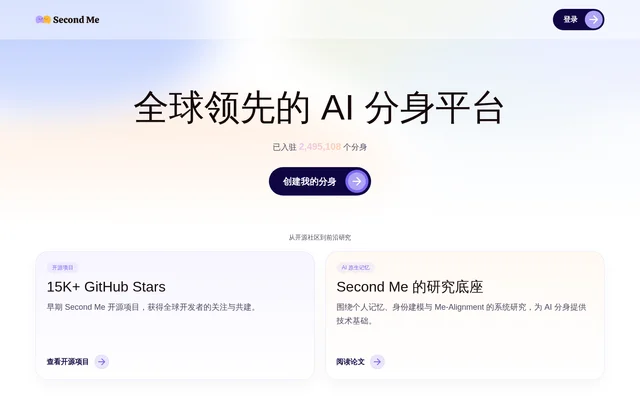
MindOS is a platform for creating personal AI avatars that represent their owners’ experiences, judgments and communication styles. MindOS is intended for individuals who want to share a representation of themselves rather than offer generic AI answers. The website describes avatars that retain the owner’s characteristic wording, tone and voice, alongside personal stories and approaches to answering questions.
MindOS connects this approach to research into personal memory, identity modelling and Me-Alignment. The website also links to an earlier open-source project called Second Me and to research papers. Those references explain the research background presented on the page; they do not establish that the current hosted MindOS service is itself open source.
What MindOS can do
MindOS combines avatar customisation with personal-content input and publishing. MindOS users can define how an avatar presents itself, supply material that shapes its responses, and share the resulting avatar with other people. The page specifically describes visitor reception, companionship and service delivery as purposes for a published avatar.
- MindOS lets users define an avatar’s core personality, voice and appearance.
- MindOS accepts notes, ideas and audio to personalise an avatar.
- MindOS supports recording voice notes or meeting content for avatar learning.
- MindOS lets users capture scattered ideas to shape an avatar’s expression.
- MindOS supports publishing and sharing personal avatars.
- MindOS lets users view, modify and delete supplied content.
How MindOS works
MindOS describes a workflow that starts with defining the avatar’s core characteristics, continues with adding memories, and ends with publishing and sharing. MindOS users enrich the avatar with past thinking, notes, ideas and inspiration. The page describes personalisation as ongoing: sharing more personal material helps the avatar become more representative of its owner.
MindOS also provides an agent-based creation and management path. The website instructs users to copy an installation request into a compatible agent product and names WorkBuddy, Codex and Claude Code as supported examples. The supplied instruction points to https://second-me.cn/skill.md and asks the agent to help create an avatar.
Who MindOS is for
MindOS is aimed at people who want their knowledge, experiences and expression to remain available through a personal AI representation. MindOS connects that goal with sharing an avatar publicly and potentially turning personal influence into ongoing revenue. The page describes the intended activities without identifying a particular profession or industry as a requirement.
- MindOS avatars can receive visitors on their owner’s behalf.
- MindOS avatars can provide companionship shaped by personal material.
- MindOS avatars can deliver services based on an owner’s experiences and viewpoints.
- MindOS users can publish and share avatars to pursue monetisation.
MindOS strengths and limitations
MindOS gives users explicit control over what their avatar learns, keeps and uses. MindOS states that only actively supplied or authorised content is used to improve the avatar, and that personal memories are not directly shown to visitors. This also defines a practical limitation: personalisation depends on the owner supplying or authorising relevant material rather than the avatar learning from unrestricted personal data.
MindOS FAQ
What is MindOS?
MindOS is a personal AI avatar platform for creating a representation of an owner’s experiences, opinions and expression. MindOS lets users define personality, voice and appearance, then personalise the avatar with memories, notes, ideas and audio.
How do you create an avatar with MindOS?
MindOS describes creating an avatar by defining its personality, voice and appearance, adding personal memories and thinking, and then publishing and sharing it. MindOS also provides an installation instruction for compatible agent products that can help create an avatar.
What can you use MindOS for?
MindOS can be used to create an avatar that receives visitors, offers companionship and provides services on its owner’s behalf. MindOS also describes publishing and sharing an avatar as a way to turn personal influence into ongoing revenue.
Can visitors see personal memories uploaded to MindOS?
MindOS states that personal memories and content are not directly displayed to people visiting an avatar. MindOS lets users decide what the avatar learns, retains and uses, with controls to view, edit and delete content.
Does MindOS work with Codex or Claude Code?
MindOS lists WorkBuddy, Codex and Claude Code as supported examples for its agent-based avatar creation and management instructions. MindOS provides a request to install https://second-me.cn/skill.md and ask the agent to help create an avatar.
From the community
No reviews yet
Be the first to review this tool. What you write helps the next person choose.