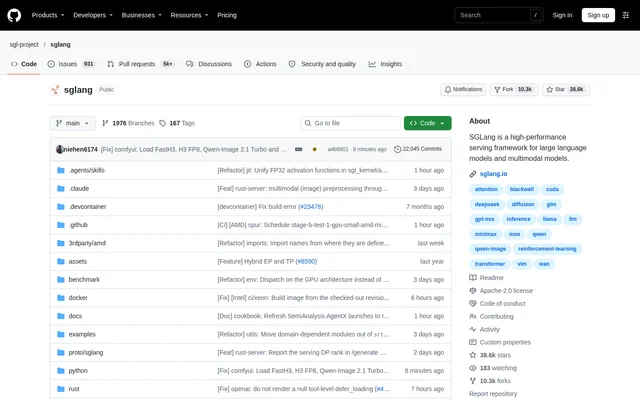
What is SGLang?
SGLang is an open-source inference and serving framework for large language, vision-language, and diffusion models. SGLang targets agentic workloads, large-scale serving, and reinforcement learning rollouts rather than presenting a standalone consumer chat application. The repository describes production use across AI labs, cloud platforms, enterprises, and universities. LMSYS, a nonprofit open-source organization, hosts the project, and the repository carries the Apache-2.0 license.
What SGLang can do
SGLang combines model serving with built-in diffusion generation and an ecosystem of deployment and training integrations. SGLang Diffusion is included in the repository and the sglang Python package for image and video generation. Related projects extend the ecosystem into audio serving, speculative decoding, and post-training workflows, while deployment integrations address routing, load balancing, and cluster orchestration.
- SGLang serves large language and vision-language models.
- SGLang generates images and videos through SGLang Diffusion.
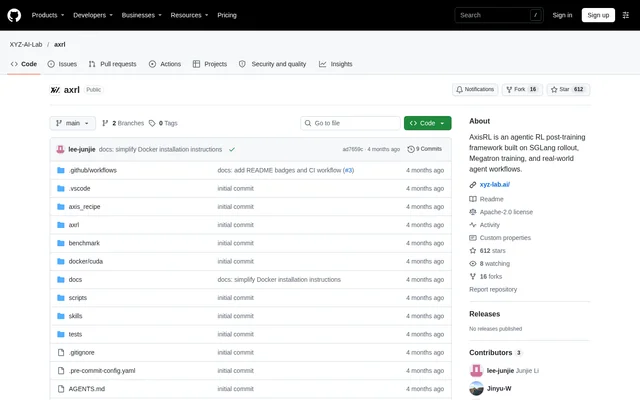
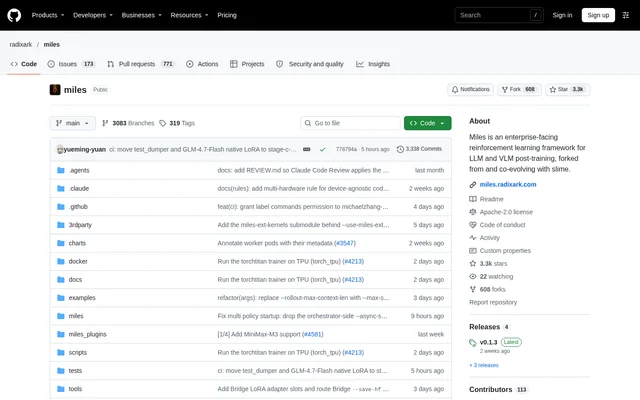
- SGLang supports rollout generation through integrations with Miles, slime, AReaL, Tunix, and verl.
- SGLang integrates with Ray Serve and NVIDIA Dynamo for deployment and scaling.
- SGLang supports draft models trained with SpecForge for speculative decoding.
How SGLang works
SGLang can be installed by pulling the lmsysorg/sglang:latest Docker image, which includes dependencies, or by installing the sglang package with uv in an activated Python environment. SGLang users then launch a model and send a request using the Quickstart. The Cookbook supplies ready-to-run launch commands based on model and hardware choices, while platform guides cover compatibility and setup.
SGLang supports GPUs, TPUs, NPUs, CPUs, and Apple Silicon. Listed platforms include NVIDIA, AMD, Google TPU, Intel, Apple Silicon through Metal or MLX, Huawei Ascend, and Moore Threads. SGLang-TorchTPU provides a PyTorch-based Google TPU serving path, while SGL-JAX provides a JAX-based path. The repository distinguishes these supported platforms from additional hardware integrations that remain in progress.
Who SGLang is for
SGLang is intended for developers and researchers working with inference infrastructure, production model serving, and training rollouts. SGLang also serves teams deploying agentic workloads or diffusion generation services. The documented ecosystem connects model execution with training frameworks and cluster orchestration tools, making the project relevant to teams that need to operate model-serving infrastructure rather than only interact with a hosted model.
- SGLang supports production language-model serving for AI labs and enterprises.
- SGLang supports reinforcement learning rollout generation through training integrations.
- SGLang supports image and video generation using diffusion models.
SGLang pricing and access
SGLang is distributed as an open-source project under the Apache-2.0 license. SGLang can be obtained from the public repository, through the published Docker image, or as a Python package. The repository does not list SGLang subscription tiers or usage-based fees. SGLang provides an email contact for enterprise adoption, deployment, technical consulting, sponsorship, and partnership inquiries without stating prices for those services.
SGLang strengths and limitations
SGLang combines support for several model families with multiple hardware backends and integrations for deployment and post-training. SGLang also provides a Quickstart, Cookbook, platform guides, and contributor documentation. The main practical constraints are technical setup and platform compatibility: installation is followed by model launch configuration, and the repository directs users to hardware-specific guidance rather than describing every model as supported on every device.
- SGLang requires a configured Docker or Python environment and a model launch step.
- SGLang model compatibility and setup vary by hardware platform.
- SGLang lists AWS Trainium, Cambricon MLU, Qualcomm QAIC, and other hardware integrations as in progress.
SGLang FAQ
What is SGLang?
SGLang is an open-source inference framework for large language, vision-language, and diffusion models. SGLang is optimized for agentic workloads, large-scale serving, and reinforcement learning rollouts, with built-in image and video generation through SGLang Diffusion.
Is SGLang free?
SGLang is available as an open-source project under the Apache-2.0 license. SGLang can be obtained through its public repository, Docker image, or Python package; the repository does not state subscription or usage-based pricing.
How do you install SGLang?
SGLang can be installed by pulling the lmsysorg/sglang:latest Docker image or installing the sglang package with uv in an activated Python environment. SGLang provides a Quickstart for launching a model and sending a request, plus a Cookbook with model- and hardware-specific launch commands.
What hardware does SGLang support?
SGLang supports GPUs, TPUs, NPUs, CPUs, and Apple Silicon, with listed platforms from NVIDIA, AMD, Google, Intel, Apple, Huawei, and Moore Threads. SGLang directs users to its Cookbook and platform guides for model compatibility and setup.
Can SGLang generate images and videos?
SGLang includes SGLang Diffusion, a built-in engine for image and video generation using diffusion models. SGLang Diffusion is included in both the repository and the sglang Python package.
What deployment and training tools integrate with SGLang?
SGLang integrates with Miles, slime, AReaL, Tunix, and verl for rollout generation. SGLang deployment and orchestration integrations include SMG, RBG, llm-d, Ray Serve, and NVIDIA Dynamo for routing, load balancing, and cluster orchestration.
From the community
No reviews yet
Be the first to review this tool. What you write helps the next person choose.